


Laser Welding In Pipeline Systems: Precision, Reliability, and Long-Term Performance
Laser welding is an advanced joining technology that uses a highly focused laser beam to melt and fuse metals with exceptional precision. Unlike traditional welding methods, laser welding produces deeper penetration, narrower seams, and minimal thermal distortion—making it especially well-suited for critical industrial applications. In pipeline systems for oil & gas, chemicals, water supply, and energy, any flaw in the weld seam can lead to costly downtime, leakage, or even catastrophic failures. This is why manufacturers and operators are increasingly turning to advanced laser welding solutions.
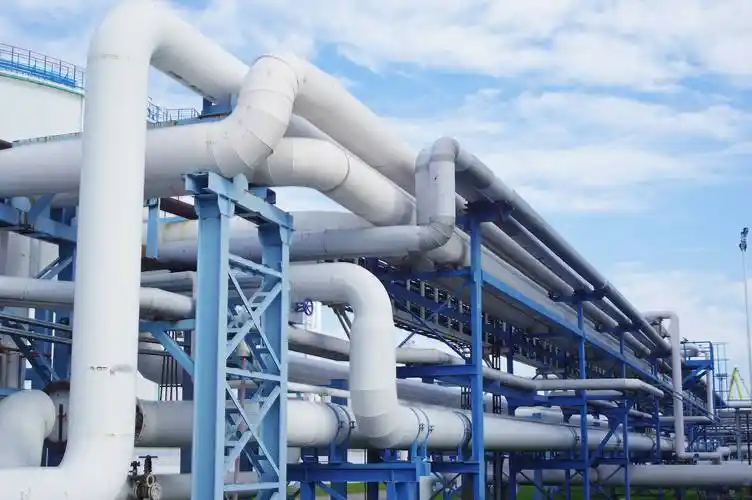
Pipeline System Connection
Structural Laser Welding in Pipeline Systems
In large-scale pipeline construction, structural welding is vital to ensuring leak-proof connections and long-term durability. Laser welding provides unique advantages when connecting pipe-to-pipe or pipe-to-fitting joints, meeting the demanding requirements of industries such as oil & gas, chemicals, and water transmission.
Pipe-to-Pipe Welding
For long-distance pipelines—whether laid on land or installed in challenging offshore environments—pipe-to-pipe welding must consistently maintain joint quality. Laser welding delivers deep-penetration welds that fully fuse the pipe walls, minimizing the risk of porosity or incomplete fusion. Its narrow heat-affected zone also reduces distortion to the lowest possible level.
Pipe-to-Fitting Welding
Pipeline systems rely heavily on fittings such as elbows, tees, reducers, and flanges. Laser welding excels in these applications, producing precise, clean welds even in geometrically complex areas. For example, when welding a pipe to a flange, uniform penetration and a smooth weld bead are essential to prevent leaks under high pressure. The repeatability of laser welding ensures highly reliable results for such structural joints.
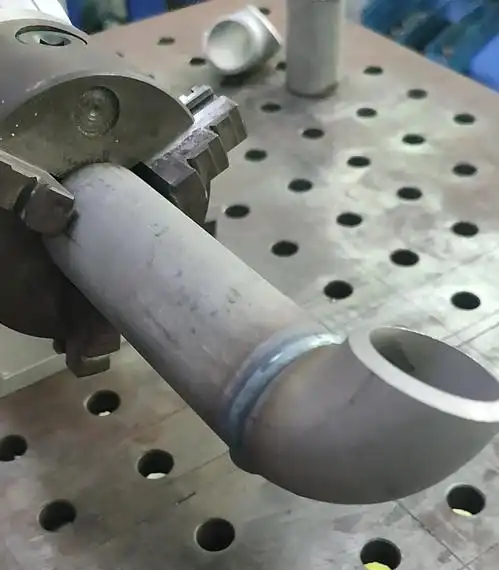
Pipe Elbow Laser Welding
Advantages Over Traditional Welding
Compared with conventional arc welding, laser welding ensures:
Deeper penetration: Even in thick-walled pipes, a concentrated laser beam achieves full-depth fusion with fewer passes.
Fewer defects: Precise energy delivery reduces common issues like cracks, porosity, and undercutting.
Lower thermal distortion: With minimal heat input, pipe geometry and alignment are better preserved, reducing the need for post-weld corrections.
By combining structural integrity with high efficiency, laser welding offers pipeline operators a powerful alternative to traditional methods, meeting today’s stricter standards for reliability and safety.
Internal Cladding and Overlay
Beyond pipe and fitting connections, laser technology is also used for internal cladding and overlay welding. Using fiber-delivered lasers with powder or wire nozzles, wear-resistant or corrosion-resistant alloys can be deposited onto the inner walls of pipes.
The laser creates a shallow, precisely controlled melt pool on the substrate; filler material melts into this pool and solidifies into a dense metallurgical bond. By moving the cladding head axially and rotating the pipe (or the head itself), continuous tracks are formed, resulting in a uniform protective inner layer.
Industry Applications
Oil & Gas
Laser welding plays a critical role in both pipeline structural welding and internal cladding. For long-distance transmission lines (onshore and offshore), it ensures strong, defect-free welds with deep penetration and minimal heat distortion. In sour gas environments (rich in H₂S or CO₂), nickel-based alloy laser cladding adds a vital corrosion-resistant barrier, protecting carbon steel pipes from pitting, cracking, and premature failure.
Chemicals & Petrochemicals
Refineries and chemical plants expose pipelines to corrosive substances like acids, chlorides, and solvents. Traditional arc welding and mechanical liners often fall short in these environments. Laser-deposited corrosion-resistant overlays—typically Hastelloy, Inconel, or stainless alloys—create dense, metallurgically bonded layers that extend service life, reduce maintenance costs, and ensure compliance with strict safety regulations.
Water Supply & Energy
For municipal water and power industry pipelines (e.g., in thermal and nuclear plants), weld reliability is crucial to avoid leaks and service interruptions. Laser welding produces strong, leak-proof, and consistent joints. Its low heat input is especially valuable for thin-walled or high-pressure pipes, preserving material integrity while minimizing post-weld inspection and rework.
Mining & Slurry Transport
Pipelines transporting slurry in mining and mineral processing suffer from severe abrasion and erosion. Laser cladding can apply wear-resistant layers—such as cobalt- or carbide-reinforced alloys—on elbows, reducers, and straight sections. This significantly extends component life, reduces unplanned downtime, and improves cost efficiency in harsh mining environments.
Choosing the Right Laser Welding Solution
Selecting the most suitable pipeline laser welding system requires careful consideration of factors such as pipe diameter, wall thickness, material type, and whether welding will be performed in the field or in a controlled workshop. The right choice ensures not only weld quality but also cost-effectiveness and long-term reliability.
Handheld / Portable Laser Welding
For on-site assembly and maintenance, handheld laser welders are highly effective. They allow technicians to perform fast, precise welds directly in the field, minimizing downtime and avoiding the need to transport large pipe sections to workshops. Compact and user-friendly, they are especially useful for repairs and small-diameter pipe installations.
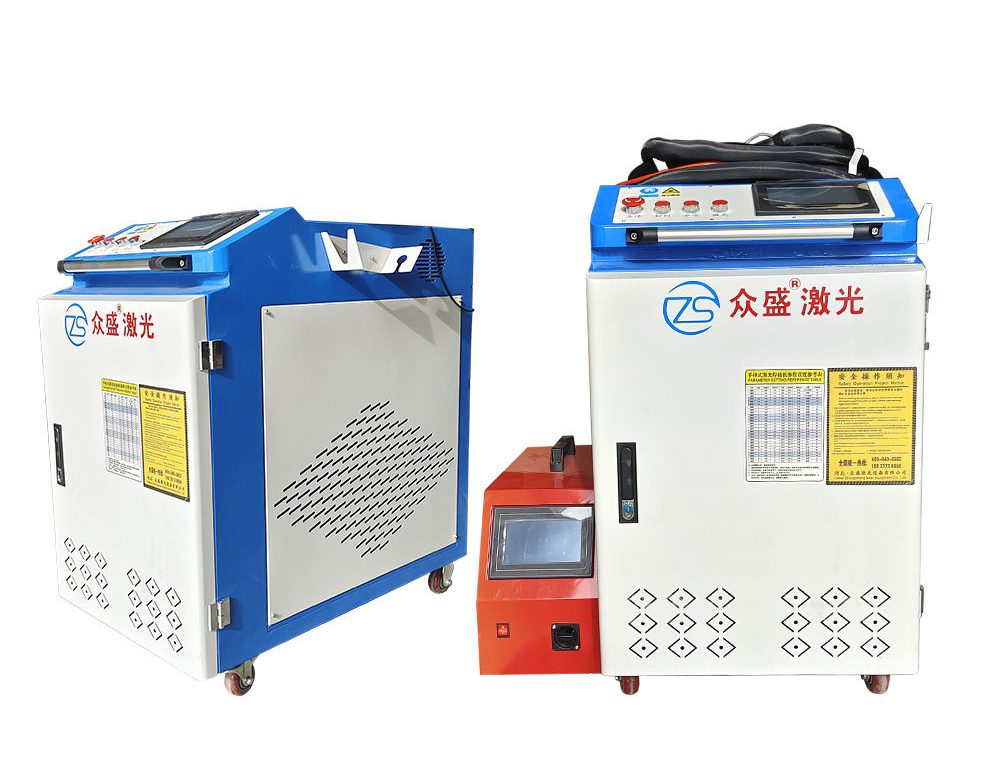
Handled Laser Welding Machine
Robotic / Automated Laser Welding Systems
Large-scale projects—such as transnational oil & gas pipelines or extensive chemical plant networks—demand consistency and speed. Automated or robotic laser welding systems deliver uniform, repeatable welds with deep penetration and minimal defects, making them ideal for high-volume production lines or long-distance construction. Integration with auto-positioning and seam-tracking technologies further boosts efficiency.
Internal Cladding and Overlay Heads
For pipelines exposed to corrosive or abrasive environments, specialized internal cladding heads are essential. Inserted inside the pipe, they deposit precision alloy or composite layers along the inner wall. Unlike conventional overlay methods, laser cladding minimizes material waste, achieves a strong metallurgical bond, and allows precise thickness control—making it the best choice for extending pipeline life in oil & gas, chemical, and mining sectors.
Laser welding provides unmatched precision, reliability, and adaptability for pipeline systems—from structural pipe-to-pipe joints to advanced internal cladding solutions. Whether your project involves massive energy infrastructure or specialized chemical pipelines, the right laser welding solution ensures durability, efficiency, and long-term cost savings.
Ready to explore a tailored laser welding solution for your pipeline project?
Contact ZS Laser today for expert consultation, free sample welding tests, and customized system recommendations.